
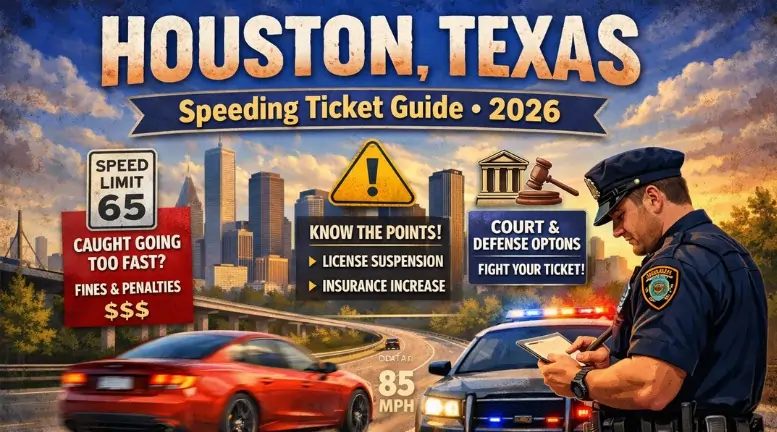
Houston Speeding Ticket? Fix It Before Court
Houston, Texas Speeding Ticket Guide — 2026
Your Complete, Simple, Step‑by‑Step Roadmap to Understanding, Responding, and Moving Forward
A Houston speeding ticket isn’t just an annoying piece of paper — it can affect your wallet, your driving record, and even your car insurance. If you got one (or want to avoid one), this guide will walk you through everything you need to know in easy, friendly language.
Whether you live in Houston or plan to drive there, this article covers the laws, fines, defenses, and what to do to stay safe — all based on real Texas rules for 2026.
Table of Contents
- What Is a Speeding Ticket in Texas?
- How Speed Limits Work in Houston
- Houston Speeding Ticket Fines (2026)
- Why Speeding Tickets Are Costly
- How Tickets Affect Your Driving Record & Insurance
- What To Do After You Get a Ticket
- How to Defend or Fight a Houston Speeding Ticket
- How to Avoid Getting a Ticket in Houston
- Helpful Resources & Courses
- (FAQs)
- Conclusion — Your Next Steps
1. What Is a Speeding Ticket in Texas?
A speeding ticket is a legal notice given by law enforcement when your vehicle is recorded going faster than the posted speed limit.
In Houston and across Texas, speeding violations are taken seriously because high speeds contribute to accidents, injuries, and fatalities.
Texas law defines speed limits based on roadway type, traffic patterns, and safety studies. Breaking those limits can result in:
Monetary fines
Points on your driving record
Higher insurance premiums
How Speed Limits Work in Houston
Speed limits vary based on location and conditions:
Standard Rules
- Residential areas — usually 30 mph
- School zones — typically 20 mph during active hours
- Highways — 60‑75 mph depending on the road
- Construction zones — may be lower for worker safety
Houston also uses variable speed limits in some areas — meaning the limit changes based on traffic and weather.
School zones, for example, become enforceable when lights are flashing or during posted times. That’s where many drivers get a school zone speeding ticket without realizing it.
You can learn more about those rules under Texas Traffic Laws here:
https://wealthguideplus.com/texas-traffic-laws
And if you’re specifically interested in how school zone tickets work, including fines and defenses, check out this detailed guide:
School Zone Speeding Ticket Houston
School Zone Speeding Ticket Dallas
School Zone Speeding Ticket Austin
School Zone Speeding Ticket San Antonio
Speeding Ticket Fines (2026)
Speeding fines in Houston can vary based on:
✔ How much you exceeded the speed limit
✔ Whether it was in a special zone (like a school zone)
✔ Your driving history
Here’s a general guideline for typical fines (including court fees):
Speed Over Limit Approx. Fine
1–5 mph ~$220–$260
6–9 mph ~$260–$290
10–14 mph ~$290–$320
15–19 mph ~$310–$350
20–29 mph ~$340–$380
30+ mph ~$380–$420
⚠ These are estimates based on typical Houston Municipal Court schedules. Actual amounts may vary slightly.
If the violation occurred in a school zone, the fines are often higher — because the risk is greater where children are present.
Why Speeding Tickets Are Costly
Getting a ticket is more than just the fine on paper. Consider:
Points on Your Record
Texas uses a point system. Too many points in a short time can lead to license suspension.
Insurance Increases
Insurance companies often raise rates after traffic violations — especially speeding tickets.
Long‑Term Cost
A ticket that seems small at first can lead to higher insurance costs over many years.
If you’re unsure how tickets affect your insurance, we cover this in more detail in our Traffic Ticket Insurance Impact Guide on WealthGuidePlus.com.
Your driving choices today can cost you more tomorrow.
How Tickets Affect Your Driving Record & Insurance
A speeding ticket in Texas typically stays on your record for several years — and insurance companies can check it when they renew your policy.
Common consequences include:
✔ Added points to your driver record
✔ Higher insurance premiums
✔ Potential difficulty getting affordable coverage
Many drivers look into ways to reduce the impact of tickets on insurance. One popular option is a defensive driving course, which may help reduce points or even dismiss the ticket in some cases.
We recommend checking a trusted source like Drive Defensively Texas for defensive driving tips and approved course info:
https://drivedefensivelytexas.com/
What To Do After You Get a Ticket
If you receive a Houston speeding ticket, follow this simple plan:
Step 1 — Stay Calm
Getting emotional won’t help — but acting doesn’t mean ignoring it!
Step 2 — Read the Ticket Carefully
Look for:
- Your alleged speed
- The location
- Court date or deadline to respond
Step 3 — Know Your Options
You generally have three main choices:
Option A — Pay the Ticket
Paying means you accept responsibility. You’ll owe the fine and possibly points on your license.
Option B — Contest the Ticket
Plead “Not Guilty” and request a court hearing. You can present your case to a judge.
Option C — Defensive Driving
Many people take an approved defensive driving course to avoid points or get a reduced result. Check out options on your site:
How to Defend or Fight a Houston Speeding Ticket
Fighting a ticket doesn’t mean just “arguing” — there are real legal strategies that may help reduce or dismiss charges:
✔ Signage Was Not Properly Posted
If the speed limit sign wasn’t visible or clear, that may be a defense.
✔ Radar/Lidar Calibration Issues
Speed detection devices must be properly calibrated; errors can affect the ticket’s validity.
✔ Officer Error
Notes in the report may sometimes offer room to question accuracy.
✔ Timing or Special Zone Issues
Did the ticket occur outside of posted hours or in a zone that wasn’t active?
A court hearing allows you to present these facts. In many cases, professional traffic lawyers or advisors help get better outcomes.
How to Avoid Getting a Ticket in Houston
Here are practical ways to stay ticket‑free:
- Slow down before you see the sign
- Pay attention to posted speed limits — especially near schools
- Be extra cautious in construction and residential areas
- Avoid distracted driving (phone use, etc.)
- Keep volume low so you can hear sirens or warnings
- Good driving habits help you stay safe and avoid fines.
Helpful Resources & Courses
Being proactive pays off. Some useful resources include:
Texas Traffic Laws
Explore all law categories related to traffic violations and penalties here:
https://wealthguideplus.com/texas-traffic-laws
Defensive Driving Courses
These can help you manage or reduce the impact of tickets and points.
A solid course can boost your understanding of safe driving, possibly help dismiss points, and even potentially reduce insurance increases. A good resource for approved defensive driving strategies is: